
Realistic 3D animal tattooing transforms wildlife imagery from static illustrations into lifelike creatures that appear to prowl across, coil around, or emerge directly from the wearer’s skin. Unlike traditional animal tattoos that rely on bold black outlines and stylized shading, 3d areola chandler realism removes hard borders in favor of directional lighting, micro-textured fur and scales, depth-of-field blurring, and anatomical contour mapping.
1. How 3D Realism Brings Wildlife to Life
Capturing the physical presence of an animal on a flat plane of skin requires combining fine-art optical illusions with accurate zoological anatomy:
-
Eliminating Hard Outlines: Real fur, feathers, and scales do not have black borders around them. Artists define an animal’s silhouette through tonal contrast—placing sunlit fur tips or bright scales directly against deep background shadows so the creature separates naturally from the epidermis.
-
Depth-of-Field Blurring: Borrowing from wildlife photography, artists render the focal point—typically the animal’s eyes, snout, or reaching claws—in razor-sharp detail, while softly blurring the ears, hind legs, or background smoke. This optical focus shift tricks the eye into perceiving physical distance between the front and back of the animal.
-
Catchlights in the Eyes: The eyes anchor the illusion of life. Leaving tiny, crisp dots of un-tattooed skin or pure white ink inside dark, glossy pupils mimics natural moisture and light reflection, giving predators and birds an unmistakable gaze.
2. Popular 3D Animal Tattoo Designs and Their Optical Tricks
Different species lend themselves to distinct 3D techniques based on their natural textures and movement:
-
Coiled Snakes and Reptiles (Anatomical Wrapping): Snakes are uniquely suited to 3D tattooing because their cylindrical bodies can physically wrap around an arm, leg, or torso. By shading the underside of the serpent’s coils and casting a continuous greywash drop shadow onto the skin beneath it, the snake appears to grip the limb in three-dimensional space. Overlapping scales catch individual specular highlights, reinforcing the tactile texture.
-
Lions, Tigers, and Wolves (Emerging Portraits): Big cats and wolves frequently use foreshortening—enlarging the nose, whiskers, and bared fangs while compressing the mane or fur behind them. Paired with torn-skin borders or swirling dark shadow, the predator appears to step forward out of the body.
-
Eagles, Owls, and Ravens (Layered Wing Perspective): Birds in mid-flight rely on overlapping feather layers. Upper primary feathers cast soft shadows onto the covert feathers beneath them, while outstretched wingtips are foreshortened toward the viewer to create dramatic wingspan depth.
-
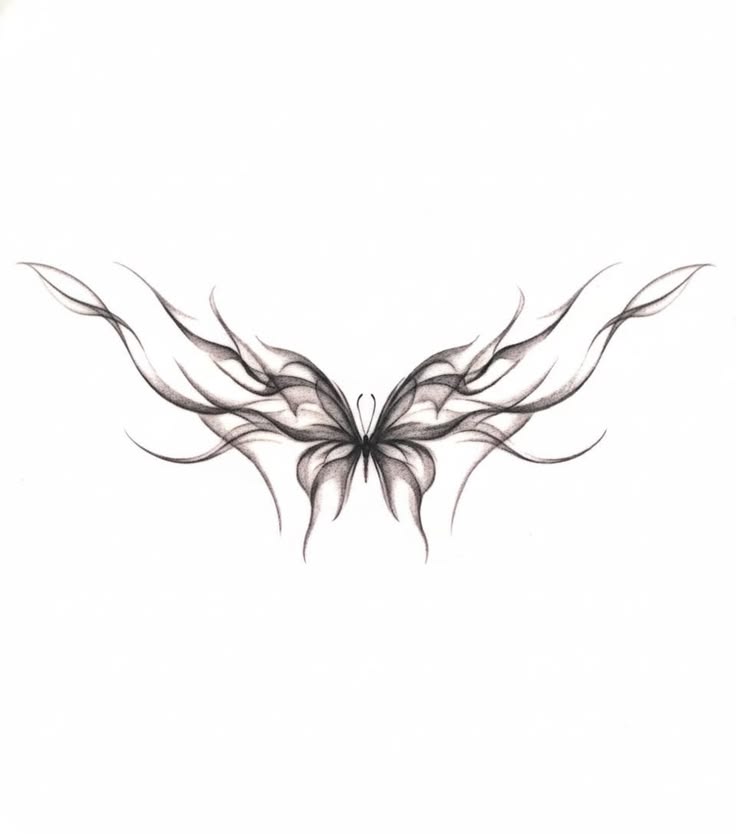
Butterflies, Spiders, and Scorpions (Floating Drop Shadows): Smaller creatures achieve hyper-realism through detached drop shadows. Placing a soft, offset shadow slightly beneath thin insect legs or lifted butterfly wings creates an air gap that makes the creature look physically perched on the shoulder, collarbone, or forearm.
3. Mastering Animal Textures: Fur, Scales, and Feathers
Selling the illusion of a living animal depends on convincing surface texture:
-
Fur and Whiskers: Rather than drawing individual hairs uniformly, artists build dark undercoat shadows first, then layer clusters of directional strokes in varying greywash or color tones, finishing with fine, bright whisker highlights that cross over shadowed areas.
-
Scales and Carapaces: Reptile scales and insect shells behave like polished armor. Artists shade each scale as a tiny dome with a dark base shadow and a crisp specular highlight facing a single imaginary light source.
-
Feathers: Soft down feathers use feathered, low-contrast shading, while stiff flight feathers feature sharp central shafts and crisp edge lighting.
4. Anatomical Placement and Longevity
3D wildlife tattoos are most convincing when custom-mapped to the natural topography of the body. Placing a roaring predator over the rounded curve of a shoulder deltoid, aligning a perched owl with the natural taper of a forearm, or letting a serpent coil around a calf allows the wearer’s muscles to reinforce the animal’s volume.
To ensure the tattoo holds its three-dimensional clarity over decades, experienced artists anchor the design with deep, saturated black ink in the undercoat, eye sockets, and cast shadows—ensuring the contrast stays sharp as the skin heals and ages.
